Elon Musk's rocket company SpaceX launched four more astronauts to orbit on Wednesday, en route to the International Space Station (ISS) for NASA, including a medical doctor turned spacewalker and a geologist specializing in Martian landslides.
The SpaceX launch vehicle, consisting of a two-stage Falcon 9 rocket topped with a Crew Dragon capsule dubbed Freedom, lifted off with its crew of four at 3:52 am EDT (0752 GMT) from NASA's Kennedy Space Center in Cape Canaveral, Florida.
If all goes to plan, the three US astronauts and a European Space Agency (ESA) crewmate from Italy will reach the space station after a 17-hour flight and dock around 8:15 pm EDT (0015 GMT Thursday) to begin a six-month science mission orbiting some 420 km above Earth.
A live NASA webcast of the liftoff showed the Falcon 9 ascending from the launch tower as its nine Merlin engines roared to life in billowing clouds of vapor and a reddish fireball that lit up the pre-dawn sky.
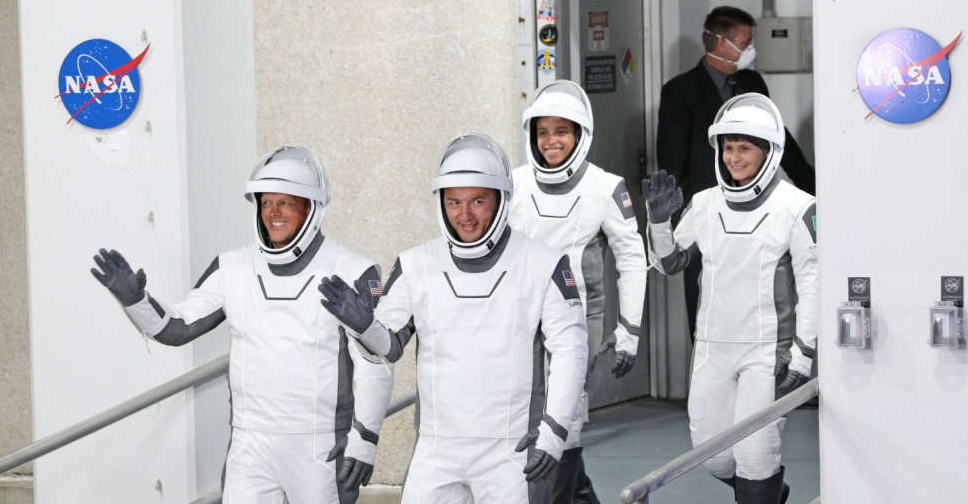
The four astronauts were seen strapped into the pressurized cabin of their capsule and seated calmly in their helmeted white-and-black spacesuits moments before and after a launch that appeared to go flawlessly.
Within 10 minutes of liftoff, the rocket's upper stage had delivered the Crew Dragon into a preliminary orbit, launch commentators said.
Meanwhile, the Falcon 9's reusable lower stage, having detached from the rest of the spacecraft, flew itself back to Earth and touched down safely on a landing platform floating on a drone vessel in the Atlantic.
"It is a privilege to get to fly this new vehicle into orbit," one of the astronauts radioed back to Earth.
The mission, designated Crew 4, is the fourth full-fledged ISS crew NASA has launched aboard a SpaceX vehicle since the private rocket venture founded by Musk, also owner of electric carmaker Tesla Inc, began flying US space agency astronauts in 2020.
In all, SpaceX has launched six previous human spaceflights over the past two years.
DIVERSE CREW
Assigned as Crew 4 commander is Dr. Kjell Lindgren, 49, a board-certified emergency medicine physician and one-time flight surgeon making his second trip to the ISS, where he logged 141 days in orbit in 2015.
During that expedition, he performed two spacewalks and participated in more than 100 science projects, including the "Veggie" lettuce experiment that marked the first time a US crew member ate a crop grown in orbit.
The designated pilot for the mostly automated flight is rookie astronaut Bob Hines, 47, a US Air Force fighter pilot, test pilot and aviation instructor who has accumulated more than 3,500 hours of flying time in 50 types of aircraft and flown 76 combat missions.
Another crew member making her debut spaceflight is mission specialist Jessica Watkins, 33, a geologist who earned her doctorate studying the processes behind large landslides on Mars and Earth and went on to join the science team for the Mars rover Curiosity at NASA's Jet Propulsion Laboratory.
The Crew 4 flight makes Watkins the first African American woman to join a long-duration mission aboard the International Space Station.
Rounding out Crew 4 is Samantha Cristoforetti, 45, an ESA astronaut and Italian Air Force jet pilot making her second flight to the space station and set to assume command of ISS operations during the team's six-month stint, becoming Europe's first woman placed in that role.
The Crew 4 team will be welcomed aboard by the seven existing ISS occupants, including the four Crew 3 members they will be replacing - three Americans and a German ESA crewmate due to end their mission in early May - and three Russian cosmonauts.
The launch came less than two days after a separate four-man team organised by Houston-based company Axiom Space returned from a two-week mission as the ISS's first all-private astronaut crew, splashing down on Monday in a different SpaceX capsule.
The ISS, the largest artificial object in space, spanning the size of an American football field end to end, has been continuously occupied since November 2000, operated by a US-Russian-led international consortium of five space agencies from 15 countries.
An international crew of at least seven people typically lives and works aboard the platform while traveling 8 km per second, circling Earth once about every 90 minutes.
The station's microgravity environment provides scientists a unique laboratory to run specially designed experiments on everything from fluid mechanics and combustion to cell growth and aging.


 Trump to wrap up Xi summit with a tour of US archives
 France to send military to protect Saudi Arabia, Macron says
 Gaza facing world's worst economic crisis, says UNCTAD
 At UN, Netanyahu defends Israel as delegates walk out
 Trump welcomes Xi to Washington looking for a trade win